


close
Choose Your Site
Global
Social Media


Views: 0 Author: Site Editor Publish Time: 2026-07-28 Origin: Site


Industrial procurement has fundamentally shifted. Sourcing custom metal parts is no longer just about raw shaping and basic welding. Today, successful procurement requires tight integration with digital models, automated job costing, and strict supply chain traceability. Buyers need components that fit perfectly into complex assemblies on the first try. You cannot afford the delays associated with rework or poor quality control on the shop floor.
For procurement officers and engineering teams, understanding modern Custom Metal Fabrication is critical. We define this as transforming raw metal stock into specialized, highly engineered components based on unique design schematics. This process stands in stark contrast to mass-producing standardized parts. It requires specialized machinery, certified operators, and rigorous inspection protocols to meet exact specifications.
Many engineering teams face escalating costs, inconsistent tolerances, and delayed lead times. These issues typically arise when partnering with fabricators who lack modern quality control. Relying on outdated manual workflows introduces human error and unpredictable scheduling. You need a partner capable of executing complex geometries with absolute precision.
Successful project outcomes depend on aligning specific fabrication methods with your structural requirements. You must rigorously audit potential service providers against 2026 industry standards. Evaluating their digital capabilities, equipment lists, and quality certifications ensures your project stays on schedule and within budget.
Digital Integration is Mandatory: Top-tier fabricators now utilize BIM-driven production and automated scheduling to eliminate tolerance stack-up and project delays.
DFM Drives Cost Reduction: Upgrading designs (e.g., swapping structural tubing for formed sheet metal or replacing welding with mechanical fasteners) significantly lowers overall project expenses.
Vendor Evaluation Requires Auditing: Selecting a partner goes beyond hourly rates; it requires verifying ISO certifications, material traceability, and specific process-level experience.
Risk Mitigation Starts at Prototyping: Validating material selection and joint design early prevents catastrophic failures and supply chain bottlenecks during full-scale production.
Table of Contents
Traditional fabrication shops often struggle with complex, high-mix/low-volume orders. These legacy operations rely heavily on manual data entry and fragmented communication. This approach leads to unpredictable job costing and severe scheduling conflicts. When unexpected delays occur, buyers face cascading supply chain disruptions that halt entire assembly lines.
Building Information Modeling (BIM) and 3D CAD integration have revolutionized the production floor. Modern fabricators feed digital models directly into CNC machinery. This direct link reduces manual translation errors and streamlines the transition from design to physical part. Operators spend less time interpreting 2D drawings and more time optimizing machine paths for faster throughput.
Automated job costing and project-based ERP systems provide unprecedented transparency. Modern fabrication management systems offer real-time capacity forecasting. Buyers can accurately predict project timelines and track work-in-progress instantly. This visibility allows procurement teams to manage inventory buffers effectively and avoid costly production bottlenecks.
Implementing a modern ERP system in a fabrication environment typically follows these steps:
Auditing existing manual workflows and identifying data silos across the shop floor.
Integrating CAD/CAM software directly with the ERP to automate bill of materials (BOM) generation.
Deploying shop floor tracking terminals for real-time labor and machine time logging.
Establishing automated material reordering triggers based on current inventory levels and upcoming job requirements.
The industry has also adapted to processing advanced, high-performance materials. Fabricators routinely handle high-strength low-alloy steels, titanium, and specialized aluminum alloys. These materials require precise thermal and mechanical handling to prevent warping or metallurgical degradation. Upgraded CNC equipment and advanced cooling systems ensure these exotic alloys retain their structural integrity throughout the fabrication cycle.
Industrial fabrication focuses on heavy-duty structural frameworks, pressure vessels, and large-scale ductwork. These projects require massive overhead cranes, heavy machinery, and certified, robust welding. Providers must adhere strictly to AWS D1.1 structural welding codes. Safety and load-bearing capacity dictate every step of the manufacturing process, requiring extensive non-destructive testing.
Commercial fabrication serves a different set of requirements. This sector produces architectural features, retail fixtures, and custom decorative panels. Aesthetics, surface finish, and corrosion resistance are paramount. Fabricators prioritize clean welds, precise polishing, and flawless powder coating applications. The final product must look exceptional while maintaining structural stability in public-facing environments.
Precision sheet metal fabrication demands the highest level of accuracy. This category covers high-tolerance components for aerospace, medical devices, and electronics enclosures. Shops utilize advanced CNC lasers, multi-axis press brakes, and tight quality control frameworks. Every micrometer matters, requiring strict environmental controls and frequent machine calibration to maintain tight geometric tolerances.
Selecting the right cutting technology dictates the edge quality and final cost of your component. Fiber laser cutting offers incredible speed and precision for thin to medium gauge metals. Abrasive waterjet cutting excels at processing thick materials without introducing heat. Plasma cutting remains the workhorse for heavy structural steel where edge perfection is secondary to speed and raw cutting power.
Each method presents unique advantages regarding heat-affected zones (HAZ) and maximum material thickness. Fiber lasers create minimal HAZ but struggle with highly reflective metals over certain thicknesses. Waterjets eliminate HAZ entirely, preserving the material's temper and preventing edge hardening. Plasma cutting introduces a larger HAZ but powers through thick steel plates rapidly, making it ideal for base plates and heavy gussets.
Understanding the cost-to-precision ratio helps optimize your budget. High-tolerance aerospace components justify the expense of precision laser or waterjet profiling. Heavy structural applications often rely on high-definition plasma to keep costs manageable. Match the cutting technology directly to your engineering requirements to avoid over-specifying the manufacturing process.
Cutting Method | Best For | Heat-Affected Zone (HAZ) | Relative Cost |
|---|---|---|---|
Fiber Laser | Thin to medium sheet metal, high precision | Minimal | Medium to High |
Abrasive Waterjet | Thick plates, heat-sensitive alloys | None | High |
HD Plasma | Heavy structural steel, thick gauge | Moderate to High | Low to Medium |
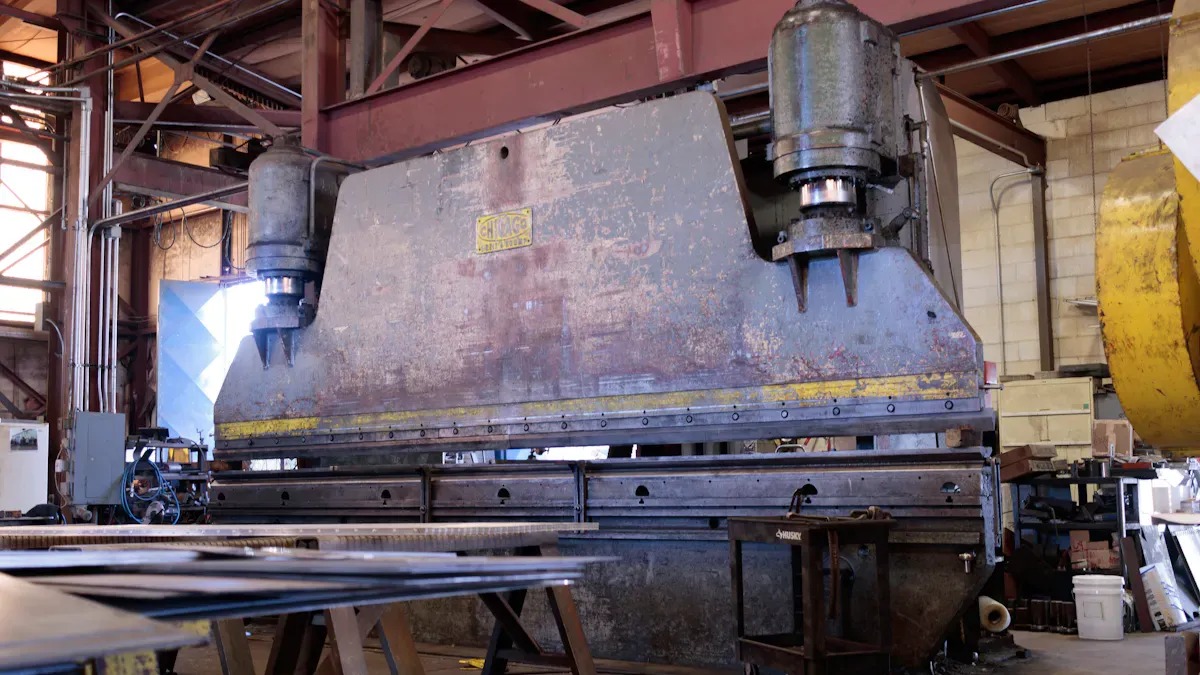
CNC press brake operations form the backbone of sheet metal shaping. These machines apply immense tonnage to bend metal along specific axes. Roll forming continuous profiles offers high-speed production for long, uniform parts. Both methods require precise tooling and experienced operators to prevent material cracking and ensure consistent bend radii across the entire batch.
Springback calculation separates average fabricators from elite providers. When metal bends, it naturally attempts to return to its original flat state due to internal stresses. Advanced fabricators use predictive software to calculate this springback accurately based on material yield strength and thickness. This technology ensures dimensional accuracy on the first pass, eliminating costly trial-and-error setups and reducing scrap rates.
Welding remains the primary method for fusing metal components. TIG welding provides exceptional control and aesthetic finishes for thin materials and visible joints. MIG welding offers high deposition rates for heavy structural assemblies. Robotic welding systems deliver unmatched consistency and speed for high-volume production runs, ensuring every weld meets exact penetration requirements.
Mechanical fastening and structural adhesives offer viable, low-distortion alternatives to traditional welding. These methods eliminate the heat-affected zone entirely. They prevent warping in thin sheet metal assemblies where heat input is a major concern. Adhesives also distribute stress evenly across the entire joint, improving fatigue resistance in dynamic load applications and dampening vibration.
Engineers frequently debate the merits of formed sheet metal versus traditional welded tubing. Using formed sheet metal for custom frames offers significant structural and financial benefits. Press brakes can fold complex geometries that replicate the strength of tubular steel. This approach reduces the total number of individual parts required for an assembly, simplifying the BOM.
Formed sheet metal also facilitates substantial weight reduction. You can optimize the material thickness exactly where stress concentrates, removing excess weight from low-stress areas. Furthermore, it eliminates complex tube-coping processes and extensive welding. This streamlining accelerates production schedules and reduces overall labor expenses on the shop floor.
Evaluating joining methods requires analyzing labor costs and inspection requirements. Certified welding, such as AWS D1.1, demands highly skilled labor and rigorous non-destructive testing. These requirements drive up production costs and extend lead times significantly. Mechanical fasteners, like Huck bolts or structural rivets, offer incredible speed and modularity for rapid assembly.
Eliminating the heat-affected zone through mechanical fastening improves long-term fatigue resistance. Welds can introduce residual stresses and micro-cracking if not executed perfectly by certified personnel. Fasteners provide predictable, verifiable clamping force. They also allow for easier field repairs and component replacement during maintenance cycles, reducing downtime for the end user.
You must define the baseline equipment age and automation level required for your project. Legacy machinery often lacks the precision necessary for modern tolerances. Providers utilizing automated material handling and late-model CNC equipment remain competitive in 2026. These investments demonstrate a commitment to efficiency, quality, and continuous improvement.
Matching the provider's niche specialization to your specific project needs is crucial. A shop excelling in heavy structural steel may fail spectacularly at ultra-precision micro-fabrication. Review their portfolio and ask for case studies relevant to your industry. Ensure their engineering team understands your specific regulatory environment and material requirements.
Buyers must request comprehensive equipment lists during the vetting process. Verify the maintenance schedules and calibration records of critical CNC machinery. A well-maintained machine produces consistent parts batch after batch. Neglected equipment introduces unacceptable dimensional variations that will cause assembly issues down the line.

Industry-specific certifications serve as the foundation of trust. ISO 9001:2015 demonstrates a baseline commitment to quality management systems. Aerospace and defense projects require strict adherence to AS9100 standards. These certifications prove the fabricator follows documented, repeatable processes and maintains strict document control.
First Article Inspection (FAI) reports validate the initial production setup before full-scale manufacturing begins. Coordinate Measuring Machine (CMM) verification ensures complex geometries meet exact CAD specifications. Critical structural welds demand non-destructive testing (NDT), such as ultrasonic or X-ray inspection. Demand these reports to guarantee structural integrity and compliance.
Strict lot tracking prevents the introduction of counterfeit or substandard alloys into your supply chain. You must outline the requirements for Mill Test Reports (MTRs) before issuing a purchase order. MTRs verify the chemical composition and mechanical properties of the raw material. This documentation is legally required for many industrial applications to ensure safety and performance.
Evaluate a provider's raw material inventory strategies carefully. Global supply chain disruptions can halt production instantly if materials are unavailable. A reliable partner maintains strategic inventory buffers for critical alloys. They should demonstrate strong relationships with multiple domestic and international steel mills to ensure consistent material flow.
Individual parts often meet standard tolerances, but the final assembly fails to align. This risk, known as tolerance stack-up, ruins expensive production runs. Small deviations compound across multiple joined components. The resulting assembly becomes twisted, oversized, or impossible to bolt together on site.
Require the fabricator to perform digital assembly simulations. Establish strict Geometric Dimensioning and Tolerancing (GD&T) frameworks prior to cutting metal. GD&T controls the functional relationship between features, ensuring seamless final assembly and reducing the need for manual rework.
Specifying the wrong alloy or finish leads to premature corrosion. Structural failure in harsh environments causes catastrophic downtime and safety hazards. Using standard carbon steel in marine environments guarantees rapid oxidation and structural compromise within months.
Mandate environmental testing data during the design phase. Collaborate with the fabricator to select appropriate grades, such as 316L stainless over 304 for superior chloride resistance. Specify robust secondary finishing processes like powder coating, hardcoat anodizing, or hot-dip galvanizing to protect the base metal.
Incomplete initial designs lead to extensive engineering change orders (ECOs). These changes cause massive budget overruns and delayed deliveries. Vague specifications force fabricators to guess your intent, often leading to incorrect assumptions and costly rework.
Utilize a phased contract approach to protect your budget. Separate the Design-for-Manufacturability (DFM) audit from the final production run. Finalize all prints and lock in fixed pricing only after completing the DFM review and approving the final CAD models.
Custom metal fabrication in 2026 operates as a highly digitized, precision-driven industry. The lowest bidder often introduces the highest systemic risk to your supply chain. Value engineering and automated workflows matter far more than cheap hourly rates when evaluating long-term partnerships.
Base your final vendor selection on their ability to integrate seamlessly with your CAD/BIM environment. Scrutinize their documented quality control processes and material traceability protocols. Prioritize partners who actively suggest cost-saving DFM improvements rather than just blindly building to print.
Compile a comprehensive Request for Proposal (RFP) detailing all technical requirements and expected volumes.
Include native 3D models and fully dimensioned 2D prints with clear GD&T callouts.
Specify all required material grades, finishes, and necessary certification reports (MTRs, FAI).
Demand a facility tour or a virtual audit of their production floor and QA lab to verify their capabilities.
With years of experience in precision manufacturing and custom metal fabrication, Emax has become a trusted manufacturing partner for customers across North America, Europe, and other global markets. Leveraging advanced CNC machining, sheet metal fabrication, precision welding, and integrated quality management systems, the company delivers custom-engineered metal components that meet demanding performance, quality, and delivery requirements across a wide range of industries.
From design optimization and Design for Manufacturability (DFM) support to prototyping and full-scale OEM production, Emax provides comprehensive engineering expertise, reliable manufacturing capabilities, and responsive technical support, helping customers shorten development cycles, reduce production costs, and build long-term competitive advantages.
A: It is the process of cutting, forming, and assembling raw metal stock into specialized, tailor-made components based on specific engineering designs. This process is entirely distinct from mass-producing standard, off-the-shelf parts, requiring specialized machinery and skilled operators.
A: Evaluate industry-specific experience and match fabrication types, such as heavy structural versus precision sheet metal. Verify QA certifications like ISO 9001, assess their digital/BIM capabilities, and review their supply chain stability and equipment maintenance records.
A: The core methods include CNC laser and waterjet cutting, press brake forming, roll forming, robotic and manual welding, and precision CNC machining. Each method is selected based on material thickness, required tolerances, and production volume.
A: DFM identifies inefficiencies early in the design phase. It reduces costs by replacing complex welded tube frames with precision-bent sheet metal or swapping labor-intensive welding for rapid mechanical fasteners, streamlining the entire production process.
A: Lead times vary from a few weeks for simple prototypes to several months for complex, high-volume assemblies. Schedules depend heavily on material availability, the complexity of the design, and the fabricator's automated scheduling systems.
A: Mill Test Reports (MTRs) and lot tracking ensure the metal meets exact structural and chemical requirements. This documentation is legally and functionally critical for aerospace, medical, and heavy industrial applications to prevent catastrophic failures.