


close
Choose Your Site
Global
Social Media


Views: 0 Author: Site Editor Publish Time: 2026-05-13 Origin: Site


You see steel, aluminum, and copper used a lot. These materials are common in industrial stamping parts. Blanking, bending, and embossing are the main processes. Picking the right material and process is important. It affects how well your parts work. It also changes how much they cost. It decides where you can use them. The table below shows how each property changes performance and costs:
Property | Performance Impact | Cost Impact | Application Suitability |
|---|---|---|---|
Hardness | Keeps die shape under force | Higher cost for hardness | Needed for blanking operations |
Wear Resistance | Makes dies last longer | Expensive but durable | Best for high-volume production |
Impact Toughness | Handles sudden loads | Tougher costs more | Good for forming strong steel |
Design, DFM, and tooling help you get precision. They also help you scale up in Precision Stamping Parts.
Pick the best material for stamping parts. Steel, aluminum, and copper are all different. Each one changes how parts work and how much they cost.
Learn about the stamping processes. Blanking, bending, and deep drawing are important methods. These methods change how parts are shaped and their final quality.
Design for manufacturability (DFM) is very important. Working early with manufacturing partners helps find problems. It also helps make parts better.
Think about cost factors closely. The material you pick, how hard the part is to make, and how many you need all change the total cost of stamping projects.
Match materials and processes to what the industry needs. Different uses, like cars or medical tools, need special properties for safety and how well they work.
Precision stamping is used to make metal parts with exact shapes. Special dies and presses are needed for this process. You pick materials like steel, aluminum, or copper for different jobs. Precision stamping helps you get parts that fit very closely and are always the same. You can make things like car brackets or parts for medical devices.
Here are the main things to know about precision stamping parts:
Characteristic | Description |
|---|---|
Material Selection | You pick metals like aluminum, steel, or special metals for each use. |
Properties of Metals | You look at things like strength, stretchiness, how well it carries electricity, heat holding, rust resistance, if it can be welded, how easy it is to machine, and how well it can be shaped. |
Thickness and Width | You choose the right size for good stamping. |
Performance in Application | You check how the part will work where it is used. |
Cost and Availability | You think about price and if you can get the material. |
Industry-Specific Requirements | You meet special needs, like strong parts for cars, clean parts for medical, or good electricity flow for electronics. |
Precision stamping helps you make parts that follow strict rules. You can get very tiny measurements, which is important for medical and electronic parts.
Stamping is used to make lots of parts quickly. New stamping machines work very fast. Automation helps you make fewer mistakes and keep quality the same. You have less waste and do not need to fix as many parts, so you save time and money.
Stamping helps manufacturing in these ways:
You can make parts fast, so you work more efficiently.
Automation makes wait times shorter and keeps quality steady.
Good quality means you throw away less and fix less.
Fewer fixes mean you spend less on workers and materials.
Precision stamping gives you parts that are always the same. You can make many parts without losing quality. In medical devices, stamping keeps people safe and makes sure things work well. You also save money because you waste less material and work faster.
Stamping is a flexible way to make parts. You can make more parts for cars, electronics, or medical uses. You can meet what industries need and keep costs low.
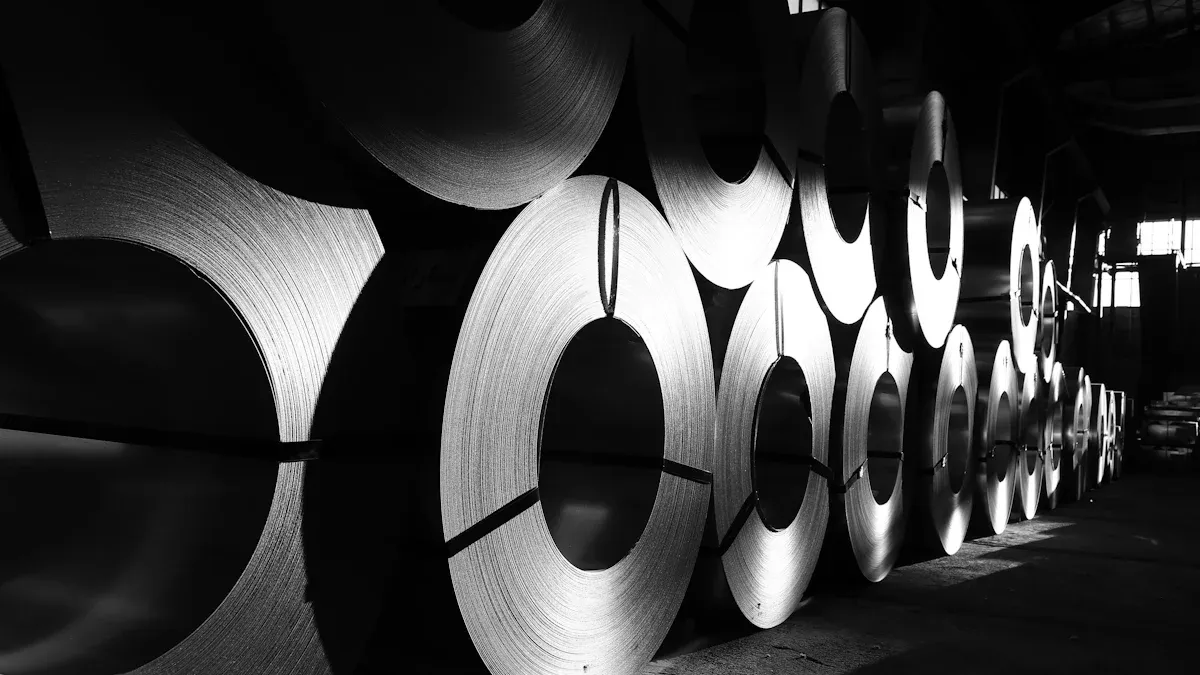
Steel is a very common stamping material. It is strong and lasts a long time. People use steel for cars, home machines, and buildings. Stainless steel does not rust or stain. This makes it good for food tools, medical tools, and things used outside. Steel can hold heavy things and works in hard places. You can make steel into many shapes. Stainless steel costs more money. But it does not rust and looks shiny and clean.
Aluminum alloys are light and strong. They are used for planes, electronics, and cars. Aluminum is easy to cut and finish. You can join it with other metals. It is good for parts that must be light and strong. Aluminum gets weaker when it gets hot. It can break when you bend it and can rust in some places. You need to know how to weld it. Look at the table below to see the good and bad sides:
Advantages | Disadvantages |
|---|---|
Lightweight and durable | Reduction in strength at high temperatures |
Versatile material for various fields | Susceptible to corrosion in some environments |
Excellent machining capabilities | Requires experience to weld |
Copper and brass are used for electric and pretty parts. Copper lets electricity and heat move well. You can make copper into thin or tricky shapes. Brass is made from copper and zinc. It looks nice and does not rust. People use brass for locks, valves, gears, and music tools. Both are easy to shape and are good for pipes and electronics.
Copper is best for electric connectors and heat sinks.
Brass is good for pretty parts and medical tools.
Sometimes you need special alloys for hard jobs. Inconel can take very high heat. Monel does not rust in sea water. Hastelloy is good for chemical plants. These alloys are strong and can handle heat. Some have special electric or magnetic powers. You see them in car sensors, engines, and many car parts. Special alloys help you meet tough rules.
You must pick the right material for your stamping job. Each material has its own special things. The table below shows what to check:
Property | Description |
|---|---|
Strength | Tells you how much force the metal can take before breaking. |
Hardness | Shows how well the surface resists wear. |
Ductility | Lets you know how much you can stretch the metal without breaking. |
Malleability | Shows how well you can shape the metal under pressure. |
Toughness | Combines strength and ductility for impact resistance. |
Elasticity | Tells you if the metal returns to its shape after bending. |
Density | Affects the weight, important for aerospace and lightweight parts. |
Melting Point | Tells you the temperature range for welding or casting. |
Tip: Always check the material properties before you pick your stamping process. This helps you get the best part for your job and save money.
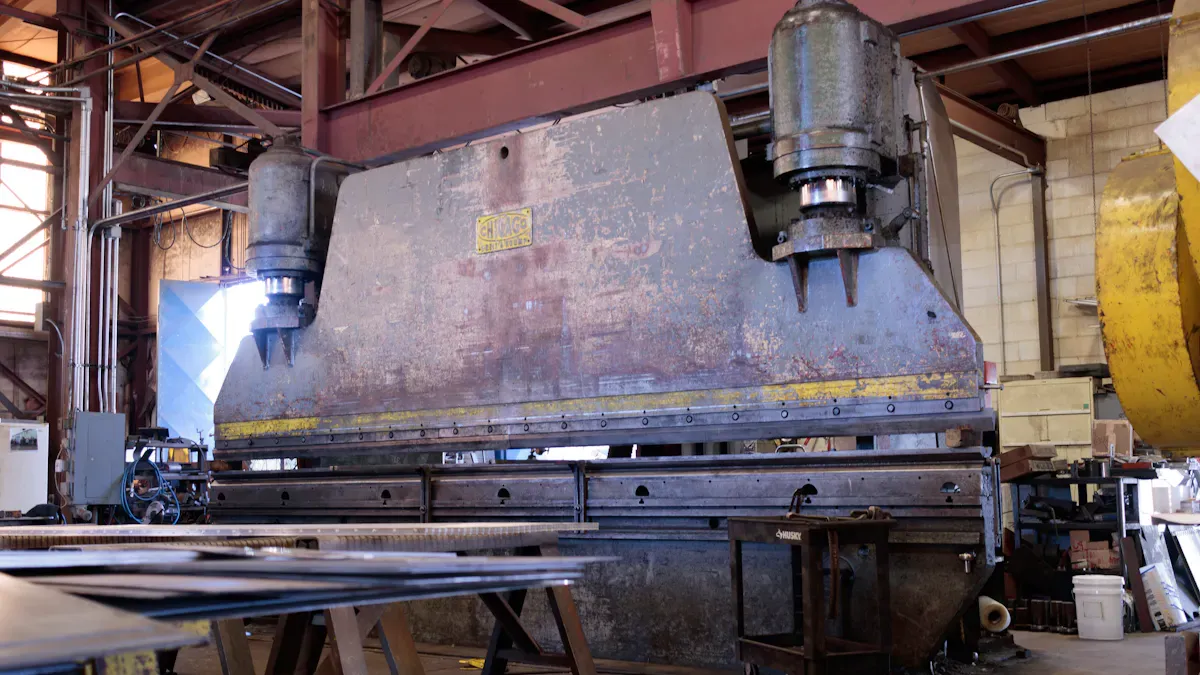
Precision metal stamping uses different ways to shape metal. Each process has things it does well and things it cannot do. You need to pick the right process for your project.
Blanking and punching are usually the first steps. Blanking cuts a flat piece from a metal sheet. Punching makes holes or shapes in the metal. These steps are fast and you can do them again and again. The parts fit together well because you can get close sizes.
Process Type | Tolerances Achievable |
|---|---|
Standard Blanking | ±0.005 inches (±0.127 mm) |
Fine Blanking | ±0.001 inches (±0.025 mm) |
You can also get smooth surfaces with these steps. Blanking and punching are best for simple shapes. If you need tricky shapes, you may need other ways.
Bending turns flat metal into angles or curves. This is a common step in stamping. You can make many shapes, but bending too much can cause cracks. The kind of metal and the angle matter a lot.
Benefits of Bending | Limitations of Bending |
|---|---|
Common operation in sheet metal stamping | Overly tight bend radius can lead to material cracking |
Allows for complex shapes and designs | Minimum bend radius is determined by material properties |
Efficient for high-volume production | Sharp bend angles can increase material stress and tool wear |
Tip: Always check the angle and space between bends. Sharp angles or bends that are too close can cause problems.
Deep drawing shapes flat sheets into deep, hollow forms. You use this for things like cans or car parts. Deep drawing gives you smooth sides and even walls. You need ductile metals for this step. The tools cost more and it takes longer than other ways.
Deep drawing makes parts with smooth insides.
You must control the pressure and use the right oil.
This works best for deep and tricky shapes.
Progressive stamping is fast and saves money. You move a strip of metal through many dies. Each die does a job, like cutting, bending, or punching. You get a finished part every time the press goes down.
Advantage | Description |
|---|---|
High Production Speed | Parts are produced with every press stroke, often hundreds or thousands per minute. |
Cost Efficiency | Reduces labor and handling costs by combining multiple operations into one process. |
Material Efficiency | Optimized strip layouts minimize scrap and leftover carrier strips can be recycled. |
Progressive stamping is good for making lots of parts. After you pay for the die, each part is cheap. This way is great for making many parts fast.
Some jobs need special stamping steps. Fourslide and multislide stamping help you make small parts with many bends. Fine blanking gives you very close sizes for gears and safety parts. These ways are used in cars, planes, electronics, and medical tools.
Fourslide stamping is good for small connectors.
Fine blanking is used for gears and strong parts.
Medical and energy companies use these for very exact needs.
Picking the right stamping process changes how hard, costly, and good your part is. You need to match the process to your design and how many parts you want.
You must think about how your design affects stamping. Simple shapes are easier to make and cost less. If you add big flanges or holes near draw areas, stamping gets harder. Sometimes you need to add these features later. Deep parts with a high depth-to-diameter ratio need more steps. This makes them cost more. Sharp corners can tear the metal. You should use a radius that is 6–8 times the material thickness. If wall heights are the same, metal flows better and you get fewer defects. Tight tolerances make parts cost more. Only use tight tolerances for important features.
Big flanges and embossments make stamping harder.
Deep draws need more steps and cost more.
Sharp corners can tear; use bigger radii.
Different wall heights can cause defects.
Tight tolerances cost more; use them only when needed.
Design for manufacturability helps you get good stamping parts. You should talk to manufacturing partners early in the design. Regular DFM reviews with designers and engineers help you find problems before making parts. Modern CAD and simulation tools let you check if your design works before making tools.
Best Practice | Description |
|---|---|
Involve Manufacturing Partners Early | Get feedback from manufacturers during design to avoid issues. |
Conduct DFM Reviews | Hold meetings to check manufacturability and quality. |
Use DFM Simulation Tools | Test designs with CAD tools to predict stamping results. |
Tip: Early DFM reviews and simulation tools help you avoid mistakes and make better parts.
Tooling design is important for making precise stamping parts. Good tooling lets you make parts within the right tolerances. If you use tighter tolerances, parts cost more and you have fewer supplier choices. Looser tolerances give you more options and cost less. Tooling must be made to tighter tolerances than the parts. For example, if your part needs a ±0.05mm tolerance, your tool should hold ±0.015–0.025mm. This helps you make parts that are always the same and high quality.
Good tooling design gives you consistent quality.
Tighter tolerances cost more and limit suppliers.
Looser tolerances cost less and give more options.
Tooling tolerance should be 30–50% of part tolerance.
Note: Always balance tolerances with how easy parts are to make and how good they need to be. This helps you get reliable stamping parts without spending too much.
Pick custom metal stamping if your project needs special shapes. It is good for tight tolerances or unique materials. Use custom stamping when regular parts will not work. If you want help with design, custom stamping is flexible. You can test a small batch before making many parts. Engineers can help you make sure your parts fit your needs. This process helps you plan for success. It keeps your production smooth.
Here are reasons to pick custom metal stamping:
Key Factor | Description |
|---|---|
Design Engineering Assistance | Engineers help you design parts and plan how to make them. |
Prototyping | You can test small batches before making lots of parts. |
Experts help you plan early for good production and reliable parts. | |
Precision Stamping Capabilities | Advanced machines make fast and accurate metal stamping. |
Material Selection | You can choose the best materials for your parts. |
Quality Control Processes | Quality checks at each step help you avoid mistakes. |
Note: Custom metal stamping helps you fix design problems early. It stops expensive changes later.
Custom metal stamping is great for tricky shapes and making lots of parts. You can add details in one press cycle. This saves time and money. Custom stamping lets you go from testing to mass production without losing quality. You get the same results every time, even for thousands of parts.
The table shows how custom stamping helps with tricky and high-volume jobs:
Benefit | Description |
|---|---|
High Precision | You get accurate metal stamping for complex designs. |
Speed of Production | After setup, you can make hundreds of parts each minute. |
Versatile Design Options | You can make detailed shapes and features in one step. |
Scalability | You can start small and grow to mass production while keeping quality. |
Cost Efficiency | You save money on labor and time, even with tight tolerances. |
Custom metal stamping is best for making lots of parts. You can trust it for cars, electronics, and other industries. When you need many sheet metal parts, custom stamping is a smart choice.
You need to look at how your material and process choices change the way your metal parts work. The right combination gives you strong, reliable stamping parts. If you pick the wrong material, your parts can break or wear out too soon. Mechanical properties like strength, ductility, and hardness decide how your parts handle stress during stamping. These properties also affect how easy it is to shape the metal and how long your parts last.
When you choose thicker materials, you get better strength and durability. Thicker metal resists bending and breaking. This is important for parts that carry heavy loads. If you use thinner sheets, you can shape them more easily, but they may not last as long. You must match the thickness to the job. For example, car makers use advanced high-strength steels for crash-resistant parts. Electronics need copper for good electrical flow. Aerospace companies use aluminum and titanium for light but strong parts.
The stamping process also changes performance. If you use the right press speed and force, your parts keep their shape. Good tooling and lubrication stop defects like cracks or wrinkles. If you do not control these things, your parts can have springback. This means the metal tries to go back to its old shape after stamping. You want to avoid this because it makes parts that do not fit.
Here is a table to help you see how different factors affect your stamped parts:
Factor | Description |
|---|---|
Strength and Durability | Thicker materials give better strength and last longer. |
Weight | More thickness adds weight, which matters for aerospace and cars. |
Formability | Thinner metals are easier to shape, but may not be as strong. |
Tooling | Good tools keep your parts the right size and shape. |
Lubrication | Stops tearing and wrinkling during stamping. |
Press Parameters | Speed and force must match the metal and part design. |
Tip: Always check the function and load needs of your parts before picking a material or process. This helps you avoid problems like cracking or springback.
You must think about cost when you pick materials and processes for stamping. The price of your metal, the type of die, and how many parts you need all change your total cost. If you use high-strength metals, you pay more for both the material and the tooling. Complex shapes need special dies, which cost more to make. Progressive dies let you make many parts fast, but they cost more at the start.
Here are the main things that drive cost in stamping:
Part complexity: More details mean higher die cost.
Die type: Progressive dies cost more but work faster for high volume.
Material selection: Stronger metals need better, more expensive dies.
Production volume: Making more parts lowers the cost per part, but you pay more at the start for tooling.
If you want to save money, keep your part design simple. Use standard materials when you can. Plan for high volume if you need many parts. This spreads out the tooling cost. If you only need a few parts, single-stage dies may be better. Always balance the cost of materials, tooling, and production to get the best value.
Cost Driver | Impact on Stamping Projects |
|---|---|
Part Complexity | More features increase die and setup costs. |
Die Type | Progressive dies are costly but efficient for large runs. |
Material Selection | High-strength metals raise both material and die costs. |
Production Volume | Higher volume lowers per-part cost, but needs bigger upfront investment. |
Note: You can lower your total cost by choosing the right mix of material, process, and production volume.
You need to match your material and process choices to where your parts will be used. Each industry has its own needs. For example, cars need strong and safe parts. Electronics need metals that carry electricity well. Medical devices need clean, precise, and safe parts.
Here are some common combinations:
Steel works well for automotive and construction parts because it is strong and durable.
Aluminum is best for aerospace and automotive parts that need to be light and resist rust.
Copper is the top choice for electronics and plumbing because it carries electricity and heat.
Titanium is great for aerospace and medical devices because it is light and does not rust.
Nickel alloys work in aerospace for parts that face high heat and stress.
Magnesium helps make vehicle parts that are light and stable.
The stamping process also matters. Progressive stamping is good for high volume and complex parts. Deep drawing works for making hollow shapes like cans or medical housings. Fine blanking gives you very precise edges for gears and safety parts.
Tip: Always think about where your parts will be used. Pick the material and process that fit your industry’s needs.
In summary:
Your choices in material and stamping process change how your metal parts perform, how much they cost, and where you can use them. If you match your choices to your project’s needs, you get strong, reliable, and affordable parts for any industry.
Before you pick a material for stamping, check a few things. Each thing helps you stop problems and makes your parts better. Use this table to help you choose:
Factor | Importance in Stamping | What to Include in RFQ |
|---|---|---|
Formability | Stops tearing, wrinkling, and springback | Minimum bend radii, drawn depth intent |
Strength needs | Handles tool loads and springback | Functional load paths, stiffness features |
Corrosion exposure | Protects parts in tough environments | Environment details, salt exposure |
Finish/coating compatibility | Keeps coatings strong during stamping | Coating type, thickness, cosmetic surfaces |
Supply chain availability | Keeps production on schedule | Approved equivalents, substitution rules |
Tip: Always pick a material that fits the place and job for your stamping project.
You need to pick the right stamping process for your part. Think about what you want to make and how many you need. Check these points to help you decide:
Pick materials with the right ductility, hardness, and tolerance for stamping.
Follow rules for hole size, bend radius, and edge distance.
Make your part shape simple and use standard features.
Set tolerances that are not too tight, and focus on key features.
Design punches and dies to last longer and use strong materials.
Work with a stamping company to test your design and try samples.
Compare costs with how many parts you need and if your design will change.
Note: Stamping is best when you make enough parts to pay for tools and setup.
You can stop mistakes in stamping if you watch out for these problems:
If you forget about the environment, your parts may fail. Always check where your parts will be used.
If you do not check electrical properties, your parts may not work. Test materials for the right electrical use.
If you only care about saving money, your parts may break. Balance cost and quality and look at all costs.
If you ignore if materials work together, you may get failures. Make sure all materials fit well together.
If you do not plan for supply chain problems, you may have delays. Stay in touch with suppliers and have backups.
Best Practice: Work with engineers and stamping companies. Test samples and get advice to make sure your parts are good for production.
You can make stamping projects better by matching the material, process, and design to your goals. If you use DFM early and pick the right tools, you can find problems sooner. This helps you save money and finish faster. Using checklists and following best practices gives you better results. The table below shows how scores got higher when people used these tools:
Group | Intervention Type | Baseline Score | Post-Intervention Score | Improvement (%) |
|---|---|---|---|---|
1 | Stamp with CME event and incentive | 4.8 | 9.0 | 87% |
2 | Stamp with CME event | 4.8 | 8.2 | 71% |
3 | Stamp sent by mail with instructions | 4.8 | 7.7 | 60% |
Follow these steps to make your stamping projects work well, cost less, and be ready for production.
You can use steel, aluminum, copper, and brass. Steel gives strength. Aluminum keeps parts light. Copper and brass help with electrical jobs. Pick the material that fits your project needs.
You look at part shape, volume, and material. Simple shapes use blanking or bending. Complex parts need progressive or deep drawing. Ask your stamping partner for advice.
You can use stamping for small batches. Custom stamping lets you test designs before mass production. Single-stage dies work well for low-volume jobs.
You check material properties, use good tooling, and follow DFM rules. Early reviews and testing help you spot problems. Keep your design simple and use standard features.