


close
Choose Your Site
Global
Social Media


Views: 0 Author: Site Editor Publish Time: 2026-08-14 Origin: Site


Surface failure in industrial applications carries compounding operational costs. When a protective coating fails prematurely, the underlying substrate succumbs to rapid corrosion and mechanical wear. This degradation leads to structural weaknesses, frequent part replacements, and extensive warranty claims. A finish that looks acceptable on the factory floor can easily blister, flake, or rust within months if it faces incompatible environmental stressors.
Selecting an incorrect finish directly compromises part integrity. It delays production schedules due to unexpected rework and causes catastrophic field failures. Engineers and procurement teams often treat the final coating as an afterthought, applying generic specifications without analyzing the specific operational demands of the component. This disconnect between design and finishing guarantees poor performance.
You need a strict framework for evaluating and specifying the correct process. The decision must account for environmental exposure, mechanical wear requirements, dimensional tolerances, and the specific substrate material. Whether you are dealing with thin-gauge sheet metal or heavy machined castings, matching the physical properties of the finish to the demands of the application ensures long-term durability and structural reliability.
Match Finish to Operational Environment: Prioritize the mechanism of protection (e.g., galvanic/sacrificial protection via hot-dip galvanizing for extreme outdoor exposure vs. barrier protection via powder coating for aesthetic durability).
Pretreatment Dictates Success: The primary point of coating failure is improper substrate preparation; rigorous cleaning, blasting, and chemical wash standards must be specified regardless of the final finish.
Account for Dimensional Shifts: Processes like plating, galvanizing, and heavy powder coating add material thickness that must be calculated and accommodated during the CAD and machining phases to ensure assembly fit.
Sequence After Fabrication: Metal surface finishing must be strategically timed post-fabrication; welding, bending, or drilling after finishing compromises the protective barrier and introduces localized corrosion risks.
Table of Contents
Specifying a durable coating requires a clear definition of what the component will endure in the field. You cannot select a process based solely on appearance. The evaluation must start with the physical and chemical realities of the operating environment. Implementing proper Metal Surface Finishing protocols ensures the substrate survives its intended lifespan without premature degradation.
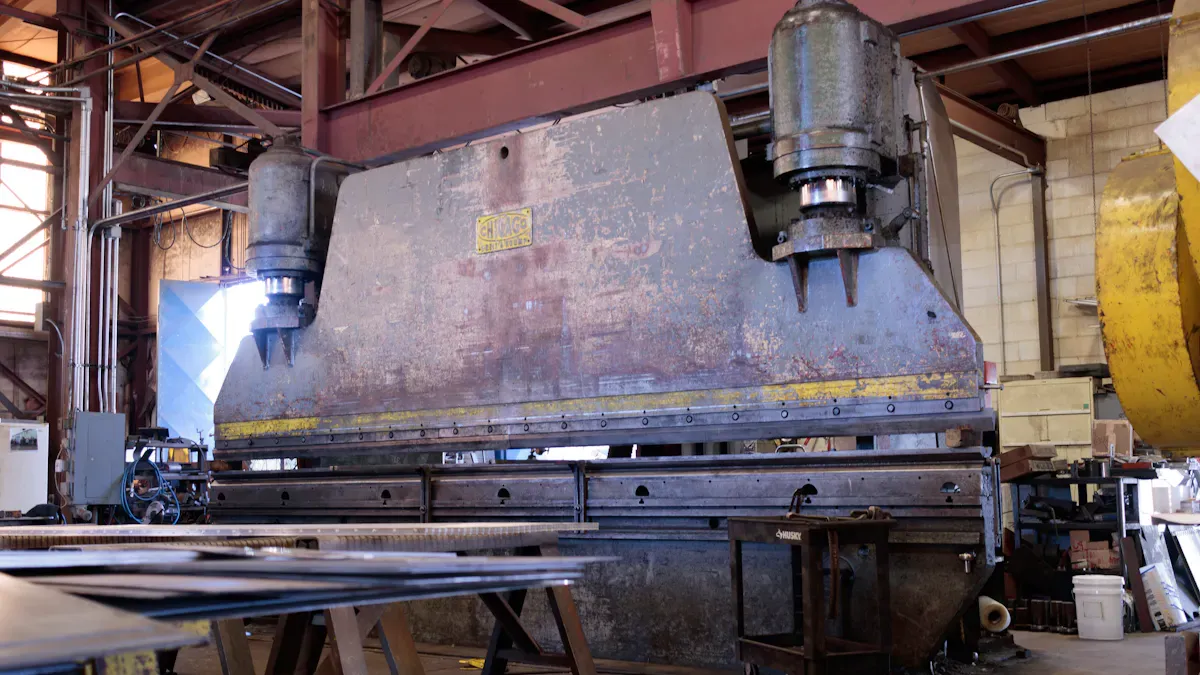
Corrosion resistance drives most finishing decisions. You must define the expected salt spray resistance hours required for the part, often measured using ASTM B117 standards. Components deployed in coastal regions or heavy industrial zones face constant atmospheric attacks. We classify these environments using ISO 12944 corrosivity categories, ranging from C1 (heated indoor spaces) to C5 (marine and heavy industrial environments).
UV stability plays a major role for outdoor applications. Certain coatings chalk, fade, or degrade rapidly under direct sunlight. Epoxy-based powders, for instance, offer excellent chemical resistance but fail quickly under UV exposure, requiring a polyurethane or polyester topcoat for outdoor use. If the part operates in a chemical processing plant or encounters harsh cleaning solvents, the finish must provide a non-reactive chemical barrier to prevent acids or alkalis from reaching the raw metal.
Physical abuse strips away weak coatings. Outline the specific mechanical demands the part will face. High-traffic components require extreme abrasion resistance to prevent the finish from wearing down to bare metal. Engineers often rely on Taber abrasion testing to quantify how much wear a coating can handle before failure. Impact tolerance is necessary for parts that endure physical strikes or heavy vibration.
In precision assemblies, surface hardness and friction reduction become primary concerns. You may need a finish that adds lubricity to moving parts. Electroless nickel plating infused with PTFE, for example, prevents galling and reduces mechanical wear over thousands of cycles without requiring external wet lubricants.
Visual requirements often dictate the final selection for consumer-facing or architectural components. You must establish criteria for precise color matching, gloss levels, and surface texture. Beyond aesthetics, regulatory compliance heavily influences the finishing chemistry. Components used in food processing require FDA-compliant, food-safe coatings that will not harbor bacteria or leach toxins.
Electronic enclosures demand RoHS and REACH compliance. These regulations strictly prohibit the use of heavy metals like hexavalent chromium, lead, or cadmium in the finishing process. Specifying a non-compliant finish can result in massive fines and product recalls.
The manufacturing origin of the part dictates the compatible finishing methods. Thin-gauge sheet metal fabrication reacts poorly to high-heat processes, making it susceptible to severe warping. Heavy structural steel can absorb massive thermal shocks but requires finishes that penetrate deep welds and joints.
Precision CNC machined components demand finishes with minimal dimensional buildup to preserve tight tolerances. You must align the finishing chemistry with the base alloy to prevent galvanic corrosion and ensure proper adhesion. Applying a highly rigid coating to a flexible sheet metal component will result in cracking and flaking as the metal bends under load.
Table: Environmental Exposure Categories and Coating Demands
ISO Category | Environment Type | Typical Application | Recommended Finishing Approach |
|---|---|---|---|
C1 / C2 | Indoor / Low Pollution | Office equipment, HVAC ducts | Standard powder coating, light zinc plating |
C3 | Urban / Moderate Industrial | Architectural panels, machinery | Polyester powder coating, heavy galvanizing |
C4 | Industrial / Coastal | Chemical plants, shipyards | Duplex systems (Galvanizing + Powder) |
C5 | Marine / Offshore | Oil rigs, saltwater infrastructure | Multi-coat epoxy/polyurethane, thick hot-dip |
Understanding the underlying mechanics of each finishing process allows you to match the coating to the application. Every method relies on a different chemical or physical reaction to protect the substrate. No single process works for every material or environment.

Hot-dip galvanizing provides unmatched sacrificial protection for steel and iron. The process creates a metallurgical bond, forming a series of zinc-iron alloy layers topped with pure zinc. If the coating gets scratched, the surrounding zinc acts as a sacrificial anode, corroding preferentially to protect the exposed steel.
The standard hot-dip galvanizing process follows a strict sequence:
Caustic Cleaning: Removes dirt, oil, and organic residues from the steel.
Pickling: Submerges the part in a dilute solution of heated sulfuric or hydrochloric acid to remove mill scale and rust.
Fluxing: Applies a zinc ammonium chloride solution to prevent oxidation before dipping.
Galvanizing: Immerses the part in a bath of molten zinc at approximately 840°F (449°C).
Cooling: Quenches the part in water or air to halt the alloying process.
This method excels in heavy structural steel applications and outdoor infrastructure. It withstands severe weather and physical abuse. However, the extreme heat introduces a high risk of severe warping in thin sheet metal parts. Galvanizing also results in a rougher, utilitarian finish with highly limited aesthetic options.
Powder coating delivers a highly durable, continuous polymer skin. Operators spray electrostatically charged dry powder onto a grounded metal substrate. The part then enters a curing oven, where the powder melts, flows, and chemically cross-links into a solid barrier. This physical barrier blocks moisture and oxygen from reaching the metal.
The powder coating application sequence typically involves:
Abrasive Blasting or Chemical Wash: Profiles the metal and removes contaminants.
Phosphate Conversion Coating: Applies an iron or zinc phosphate layer to improve adhesion and prevent under-film corrosion.
Drying: Removes all moisture from the substrate in a low-heat oven.
Electrostatic Application: Sprays the charged powder particles onto the grounded part.
Thermal Curing: Bakes the part at 350°F to 400°F to cross-link the polymer.
It remains the optimal choice for automotive components, architectural sheet metal, and parts requiring high aesthetic quality. You can specify exact colors, textures, and gloss levels. The limitations center around the application mechanics. The substrate must be conductive and capable of withstanding curing temperatures. Powder coating also struggles with the Faraday cage effect, where the electrostatic charge prevents powder from fully penetrating deep recesses or tight inside corners.
Industrial wet painting utilizes liquid pigments and binders, such as epoxies and polyurethanes. These coatings cure through solvent evaporation or chemical cross-linking. Wet paint forms a protective physical barrier over the substrate and offers infinite color matching capabilities.
Wet painting is necessary for oversized assemblies that simply cannot fit into standard curing ovens or galvanizing kettles. It is also the only viable option for field touch-ups and substrates sensitive to high heat. Despite its versatility, wet paint generally offers lower impact and abrasion resistance compared to powder coating. It requires multiple coats, primer layers, and significantly longer drying times. Facilities must also manage higher environmental compliance demands due to the emission of Volatile Organic Compounds (VOCs) during the curing phase.
Anodizing is an electrochemical process that thickens the natural oxide layer on the surface of metal parts. Unlike paints or powders that sit on top of the substrate, anodizing integrates directly into the metal. Operators submerge the part in an acid electrolyte bath and pass an electrical current through it. This process is primarily utilized for aluminum substrates.
Type II sulfuric anodizing provides moderate wear resistance and allows for vibrant color dyeing. Type III hardcoat anodizing provides extreme wear resistance and surface hardness for precision machined components and aerospace parts. It protects the metal without adding significant dimensional thickness, preserving tight machining tolerances. The primary limitation is material specificity. You can only anodize aluminum, titanium, and magnesium. Furthermore, the final color and appearance rely heavily on the specific alloy composition. You will often see color matching inconsistencies across different batches of raw material.
Plating deposits metal ions onto a substrate to alter its surface properties. Electroplating uses an electrical current to drive zinc, nickel, or chrome ions onto the part. Electroless plating relies on an autocatalytic chemical reaction to deposit a highly uniform layer of metal, typically nickel, without external electrical power.
These processes excel at enhancing electrical conductivity, providing EMI/RFI shielding, or achieving extreme surface hardness. Hard chrome plating drastically increases the wear life of hydraulic cylinders. However, plating introduces significant risks. High-strength steels are susceptible to hydrogen embrittlement during the plating process. The atomic hydrogen absorbed during the acid pickling and plating stages can cause catastrophic structural failure under load. You must mandate immediate post-plate baking (usually within 1 to 3 hours) to bake out the hydrogen and relieve the stress.
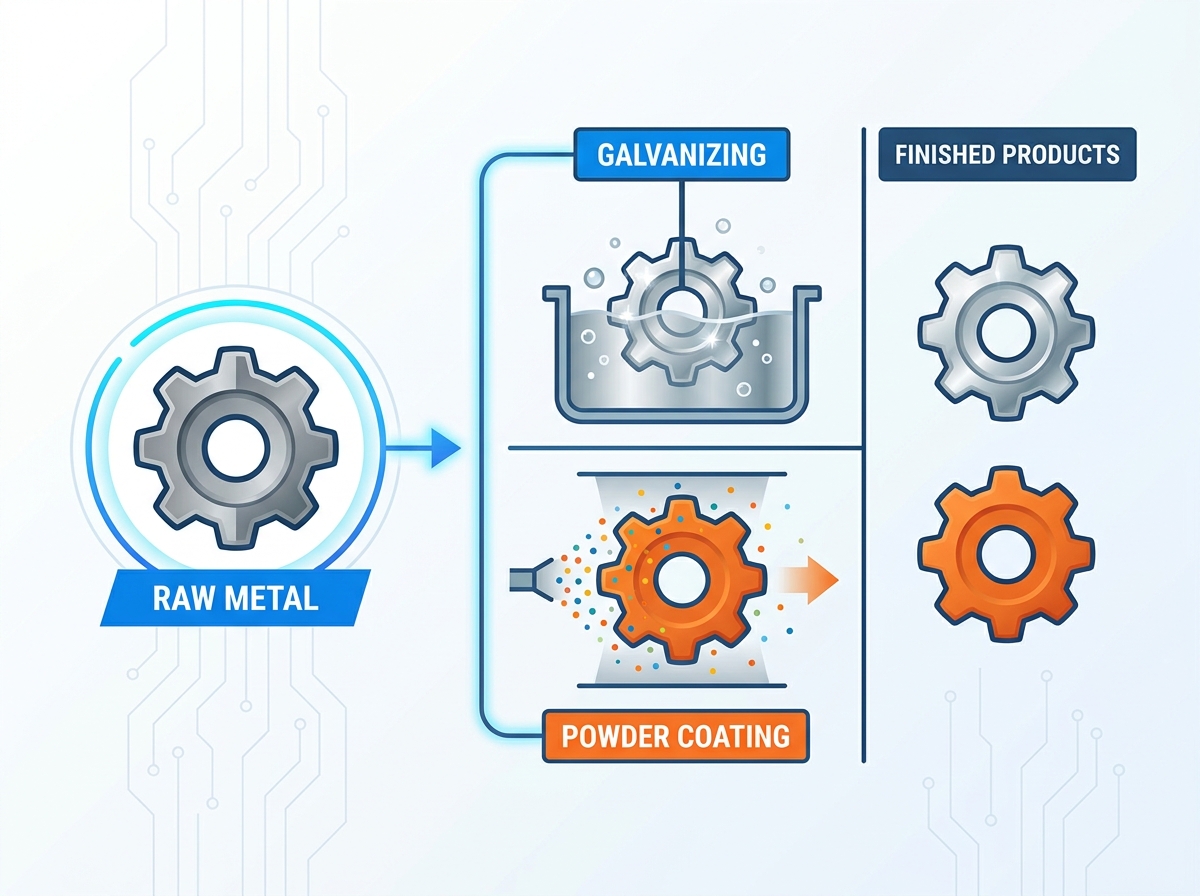
Selecting between the three most common industrial finishes requires a direct comparison of their protective mechanisms, dimensional impacts, and production scalability. You must weigh the trade-offs of each method against the specific demands of your engineering drawings.
Galvanizing relies on sacrificial protection. The zinc coating will actively corrode to protect the underlying steel, even if the surface is deeply scratched. This makes it ideal for harsh, unmonitored environments. Powder coating provides barrier protection. It seals the metal away from the elements. If the polymer skin is breached, moisture can creep under the coating, leading to localized rust and eventual flaking. Anodizing utilizes oxide integration. The protective layer is fully integrated into the aluminum substrate, meaning it cannot peel or flake off under stress.
The added thickness of a finish drastically impacts tight-tolerance assemblies. Hot-dip galvanizing adds a thick, uneven layer of zinc, often requiring threaded holes to be re-tapped after finishing. Powder coating adds a consistent 1.5 to 4.5 mils of thickness per surface. You must calculate this buildup during the CAD phase to ensure mating surfaces still fit together. Anodizing alters dimensions the least. Type II anodizing adds minimal measurable thickness, while Type III hardcoat penetrates the metal and builds up slightly, usually requiring only minor tolerance adjustments.
Hot-dip galvanizing offers rapid batch processing. Entire structural assemblies can be dipped and finished in minutes, but the aesthetic result is strictly utilitarian. You get a mottled gray finish. Powder coating takes longer to apply and cure, but it offers infinite aesthetic flexibility. You can specify exact RAL colors, metallic flakes, and textured grips. Anodizing falls in the middle, offering a sleek, metallic appearance with limited dye options based on the alloy.
Batch processing in hot-dip tanks allows for massive throughput of heavy structural components. Continuous automated powder coating lines scale perfectly for high-volume consumer goods and sheet metal parts, moving parts via conveyor through wash, spray, and cure stages. Anodizing requires precise racking and controlled bath times, making it slightly more labor-intensive for complex geometries. You must align your production schedule with the throughput capabilities of the chosen finishing method.
Table: Comparison of Primary Metal Finishes
Process | Primary Protection Mechanism | Typical Thickness Added | Aesthetic Options | Best Substrate |
|---|---|---|---|---|
Hot-Dip Galvanizing | Sacrificial (Galvanic) | 2.0 - 6.0 mils | Very Low (Utilitarian gray) | Heavy Steel, Iron |
Powder Coating | Physical Barrier | 1.5 - 4.5 mils | Very High (Custom colors, textures) | Sheet Metal, Aluminum, Steel |
Type III Anodizing | Oxide Integration | 0.5 - 2.0 mils | Moderate (Dye dependent) | Aluminum, Titanium |
Electroless Nickel | Physical Barrier / Hardness | 0.1 - 1.0 mils | Low (Metallic silver) | Machined Steel, Copper, Brass |
Even the most advanced finishing chemistry will fail if applied incorrectly. Understanding the common failure points allows you to build strict quality control requirements into your manufacturing specifications.
Poor adhesion represents the highest implementation risk in any coating process. If the substrate is dirty, the finish will fail. You must mitigate this by specifying exact pretreatment protocols. Mandate abrasive blasting profiles (such as SSPC-SP10 Near-White Metal Blast) to remove mill scale and create a mechanical anchor pattern for the coating. Require multi-stage chemical washes to strip away residual cutting fluids, stamping lubricants, and shop dirt. For porous materials like cast iron or cast aluminum, mandate specific thermal outgassing procedures to prevent trapped moisture from blistering the final finish in the curing oven.
Attempting to weld, drill, or bend metal after it has been finished destroys the protective barrier. The heat from welding burns away powder coating and vaporizes galvanization, leaving the joint entirely exposed to corrosion. You must finalize all fabrication steps before the part goes to the finishing line. Additionally, residual weld spatter and silica slag prevent coatings from adhering. Mandate strict mechanical cleaning of all welds, requiring grinders or wire wheels to remove slag before chemical pretreatment begins.
Applying the wrong finish to a specific alloy leads to immediate adhesion failure or severe galvanic corrosion. For example, applying a heavy copper plating directly to steel without a nickel strike layer causes poor bonding. Mitigate these risks by strictly matching the metal alloys to their appropriate finishing chemistry. Consult material data sheets to ensure the curing temperatures of the finish will not anneal or weaken the temper of the base metal.
Liquid paints and powder coatings naturally pull away from sharp edges during the curing process. As the material flows, surface tension draws it away from 90-degree corners, leaving the edges with minimal mil thickness and highly vulnerable to rust. You can mitigate this through proactive design modifications. Specify radiused edges and chamfers on all machined parts and laser-cut sheet metal. Breaking sharp edges allows the coating to wrap uniformly around the geometry, ensuring consistent protection across the entire component.
Table: Common Coating Defects and Mitigations
Defect Type | Primary Cause | Engineering Mitigation Strategy |
|---|---|---|
Blistering / Pinholing | Trapped moisture or gas in porous metal | Mandate thermal outgassing prior to coating application |
Flaking / Peeling | Poor surface preparation or residual oils | Specify multi-stage chemical wash and abrasive blasting |
Edge Rusting | Coating pulling away from sharp 90-degree corners | Design parts with radiused edges and chamfers |
Faraday Cage Effect | Electrostatic charge repelling powder in tight corners | Redesign deep recesses or switch to wet painting |
Consult with a finishing engineer during the initial CAD phase to accurately calculate and accommodate coating thicknesses on mating surfaces.
Request physical prototype runs to verify adhesion strength, edge coverage, and color accuracy before approving full-scale production.
Establish clear QA/QC acceptance criteria, including minimum acceptable mil thickness and required salt spray hours.
Finalize all welding, drilling, and bending operations prior to finishing to maintain the integrity of the protective barrier.
Effective surface finishing also depends on how well coating requirements are integrated with the preceding fabrication and component manufacturing processes. Hangzhou Emax Industrial Co., Ltd. has been serving the hardware industry since 1993, with manufacturing capabilities covering stamping, sheet metal fabrication, agricultural machinery parts, electronics hardware, and other custom metal components, helping customers coordinate material selection, fabrication, and finishing requirements for reliable industrial applications.
A: Hot-dip galvanizing submerges steel into molten zinc at roughly 840°F, creating a thick, metallurgically bonded alloy layer ideal for harsh outdoor environments. Zinc electroplating uses an electrical current to deposit a much thinner layer of zinc onto the metal. Electroplating offers tighter dimensional control and a smoother appearance but provides significantly less corrosion resistance.
A: Yes. This combination is known as a duplex system. The powder coating provides a physical barrier and aesthetic appeal, while the underlying galvanization offers sacrificial corrosion protection. Success requires strict pretreatment. The galvanized surface must be properly cleaned, profiled with a light abrasive sweep blast, and outgassed in an oven to prevent blistering.
A: Coatings add physical material to the substrate. Powder coating can add up to 4.5 mils of thickness per surface, which quickly throws tight-tolerance assemblies out of spec. Plating and galvanizing also alter hole diameters and thread pitches. Machinists often need to mask critical mating surfaces or tap holes oversized to accommodate the final finish.
A: Powder coating delivers superior impact resistance, abrasion tolerance, and edge coverage. The electrostatic application ensures uniform distribution, while the thermal curing process creates a dense, cross-linked polymer skin. Wet paint relies on solvent evaporation, making it more prone to runs and drips. Powder coating also eliminates volatile organic compounds, simplifying environmental compliance.
A: For extreme marine environments, a duplex system offers the highest protection. This involves hot-dip galvanizing the steel substrate followed by a marine-grade epoxy primer and a durable topcoat. If using aluminum, Type III hardcoat anodizing sealed properly provides excellent saltwater resistance. The choice depends heavily on the base metal and mechanical wear.
A: Adhesion failure almost always traces back to poor substrate pretreatment. If oils, mill scale, rust, or welding silicates remain on the metal, the powder cannot bond. Blistering often occurs when porous metals trap moisture or gases. As the part heats in the curing oven, these trapped gases expand and push through the coating, creating pinholes.